
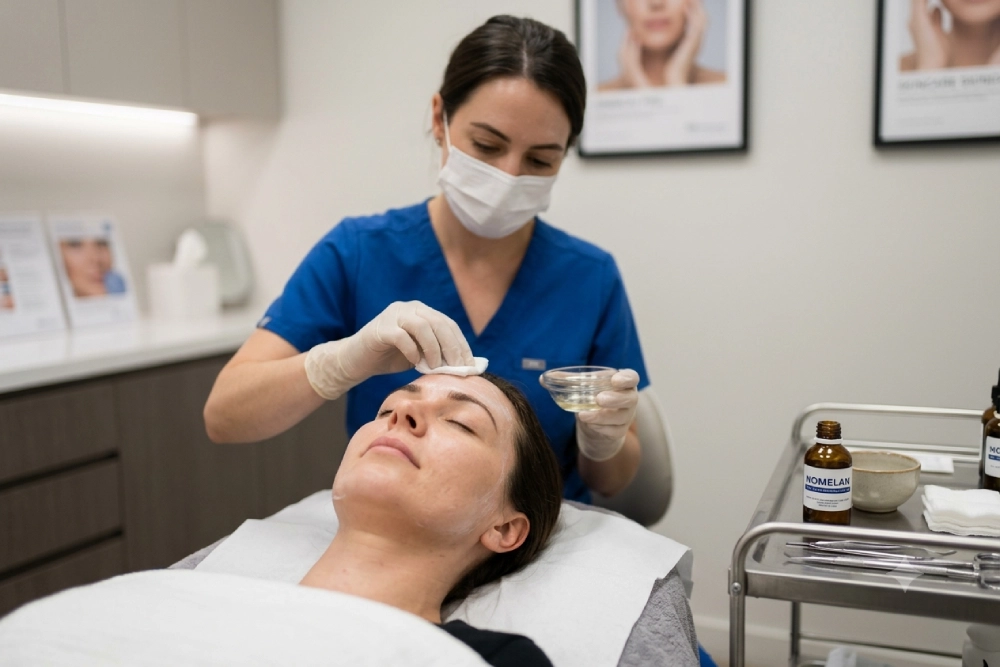
Nomelan Peel treatment in GK2 is helping people finally deal with patchy skin tone, sun tan that won’t budge, and dark spots that keep coming back no matter what cream they try. It’s a medical-grade chemical peel made from a mix of TCA, phenol, retinoic acid and a few other active acids like glycolic, mandelic and salicylic acid. Together they work on the outer layers of the skin, lifting off the damaged, discoloured layer and letting fresher skin take its place. The procedure itself is quick and doesn’t require any cuts or downtime in the clinic — you walk in, get it done, and walk out. The only thing to plan for is the week after, where your skin will peel and look a bit rough before it settles into something noticeably clearer and more even.
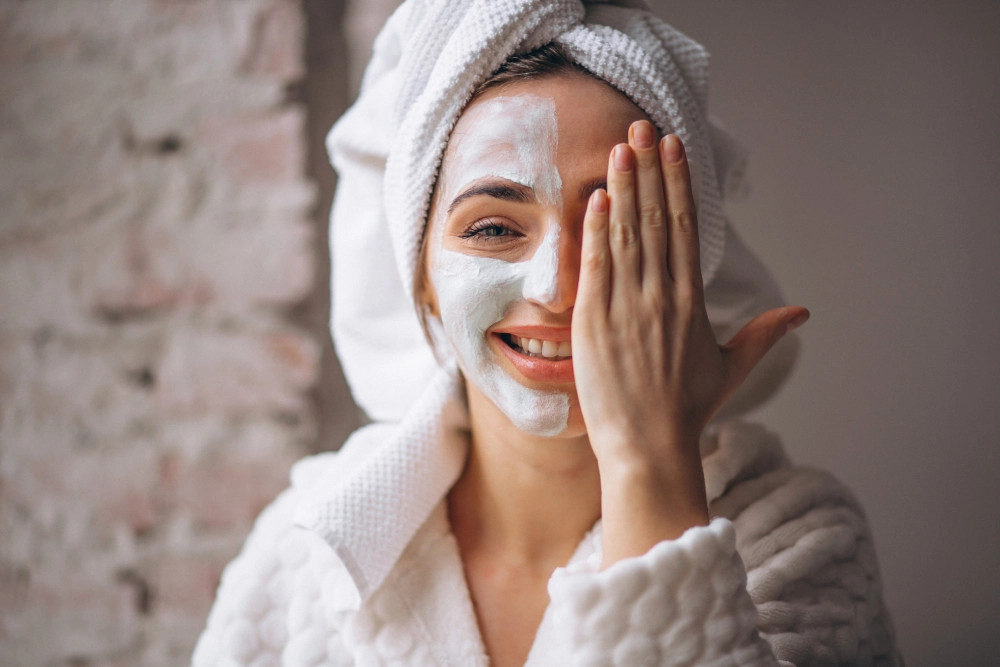
What makes Nomelan different from a lot of the peels you’ll come across is that it isn’t a single acid doing all the work — it’s a combination, and each ingredient is doing something specific. TCA goes after the aged, sun-damaged layer of skin so it can be replaced with newer cells. Phenol breaks down dead skin build-up and also helps keep the elastin fibres in better shape, which matters for how “tired” or “tight” skin looks over time. Salicylic acid gets into the pores and clears out the dirt and oil sitting there, while also nudging the skin to renew itself faster. Retinoic acid rounds it off by softening fine lines and improving the skin’s overall elasticity. On the body, the same peel is often used to tackle stubborn tan lines or patchy pigmented areas that don’t respond to regular treatments.
A1. It's a chemical peel that combines several acids — mainly TCA, phenol and retinoic acid — to remove the top damaged layer of skin and even out tone and texture underneath.
A2. Most peels use one or two active ingredients. Nomelan uses a wider blend, so it can address pigmentation, texture, pores and fine lines in a single session rather than needing separate treatments for each.
A3. There's a warm, tingling sensation during the peel, and some tightness afterward. It's tolerable for most people, and the doctor will usually numb the area a bit beforehand if needed.
A4. Plan for about a week. The skin will look red and start peeling within a couple of days, and it settles down by day 6 or 7 for most people.
A5. Yes, it's commonly used on the body too — especially for tan removal or pigmented patches that haven't responded to other treatments.
A6. For a lot of people, yes, one session gives a visible improvement. But for deeper melasma or long-standing pigmentation, your dermatologist might suggest a follow-up peel a few weeks later.
A7. That's exactly why people with darker skin tones are usually advised against this specific peel — the phenol content can cause uneven lightening in higher melanin skin.
A8. Sun exposure without SPF, scrubbing or exfoliating the area, and skipping moisturiser. Your skin is in repair mode, so it needs to be left alone as much as possible during that first week.
A9. It depends on your skin and what else you're getting done. Some dermatologists space it out from lasers or other peels rather than stacking them in the same visit — best to check with your doctor directly.
A10. A qualified dermatologist. Given the strength of the ingredients involved, this isn't something to book without an in-person skin assessment first.
A11.Nomelan Peel treatment in Delhi is available at Klarity Skin Clinic, where trained professionals offer personalised treatment plans based on individual skin goals.
Klarity Skin Clinic, M – 69, First Floor,
M Block Market, Greater Kailash II, New Delhi 110048
Copyright © 2025 All Rights Reserved.
Klarity Skin Clinic is Unit of Acara Wellness Private Limited.


