
How Do You Protect Your Skin From Firecracker Smoke and Delhi Smog This Diwali?
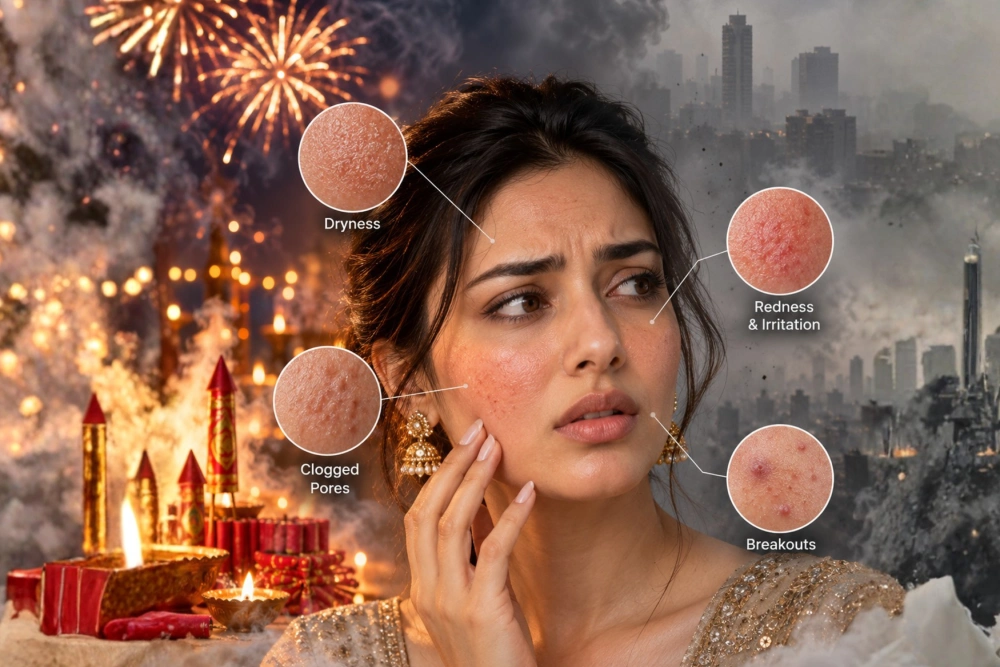
Everyone plans their skin for the Diwali photos. Almost nobody plans it for the smoke. Between firecrackers and Delhi’s heavy winter air, your face takes hits that no festive facial can undo. The fix is not a longer routine. Good Diwali skin care is a smarter one, so here is a simple method to protect your skin from firecracker smoke, a 7-day reset for afterwards and the signs that mean it is time to see a dermatologist.
Delhi’s air is already heavy in late October and November. Cooler nights and slower winds tend to hold dust, vehicle exhaust and stubble-burning smoke close to the ground. Add the soot, metal particles and chemical residue from firecrackers and your skin faces a much thicker mix than it does on an ordinary day.
Your skin is also under other seasonal pressures The weather turns drier, heaters and fans change the humidity at home and many people travel, stay up late and eat differently during the festival. Each of these makes the skin barrier a little weaker, so smoke irritates it more easily. This is why the same face that coped fine in September can suddenly feel tight, itchy or breakout-prone in Diwali week.
The good news is that the barrier recovers well when you protect it early and keep your routine simple.
Smoke leaves a film of fine particles and soot on your skin and hair. Your barrier can handle a little of that. During Diwali week it gets overloaded, so learn to read the signs:
| Your skin says | What is likely happening | Your first move |
|---|---|---|
| Tight and stinging | The barrier is stressed and losing moisture | Switch to a bland moisturiser and pause strong actives |
| Sudden bumps | Pores are clogged with soot and oil | Cleanse gently and do not pick |
| Dull, greyish look | A smoke film plus dehydration | Double cleanse, then hydrate |
| Red, itchy patches | Irritation or a flare of eczema or sensitive skin | Use a fragrance-free cream and see a doctor if it lasts |
| New dark spots | Inflammation plus UV, common on skin tones that pigment easily | Wear SPF daily and never scrub |
Forget the ten-step routine. Remember one word:
S is for Shield. Apply a ceramide moisturiser and SPF 30 or more before you step out. Haze does not block UV.
M is for Mask up. Wear a well-fitted mask outdoors and keep makeup light, because heavy foundation traps smoke particles.
O is for Off, the same night. Double cleanse with an oil-based cleanser, then a mild one. Wash smoky hair too and change your pillowcase.
K is for Keep it calm. Use lukewarm water and bland products. Skip scrubs, lemon, toothpaste and other home remedies, which can burn irritated skin.
E is for Examine. Check your skin every morning. Anything that stings, swells or spreads deserves a closer look.
That is a complete Delhi pollution skin care routine in five letters and it suits every skin type. Just match the products: gel cleansers for oily skin, fragrance-free ceramide creams for dry or sensitive skin.
The S.M.O.K.E. method stays the same for everyone, but small product swaps make it work better for you.
A few habits quietly undo good skin care during the festival:
Smoke does not only settle on your face. Your scalp and hair hold soot and odour, which can leave the scalp itchy or oily and the hair dull. Wash hair after heavy smoke exposure and avoid going to bed with it tied tightly while it is still smoky.
Lips and the skin around the eyes are thin and dry out quickly in winter air, so apply a plain lip balm with SPF and a gentle eye-area moisturiser. If your eyes sting or turn red, rinse them with clean water and avoid rubbing. Hands touch everything at a festival, so wash them often and moisturise afterwards, because dry cracked hands often show the first signs of barrier stress.
They will not replace a good routine, but they support it. Sweets, fried snacks and late dinners are part of the celebration and you do not need to avoid them. Try to balance them with water through the day, fruits and vegetables and a reasonable amount of sleep. When you are dehydrated and tired, skin looks duller and recovers more slowly, so small habits add up over the week.
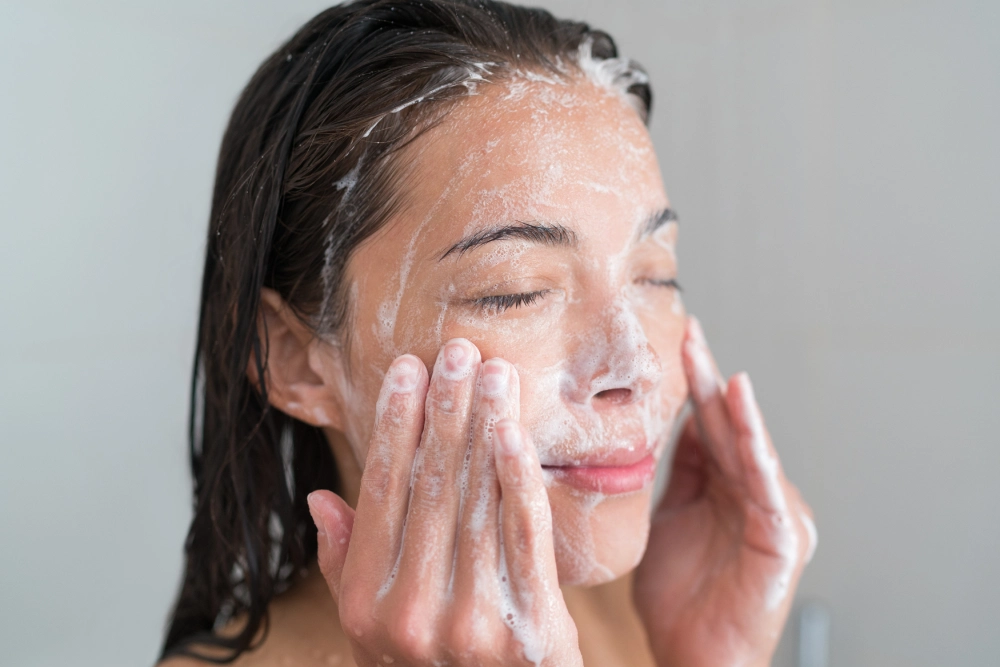
| Days | Focus | What to do |
|---|---|---|
| 1 to 2 | Calm | Gentle cleanser, bland moisturiser and SPF. No actives. |
| 3 to 4 | Hydrate | Add hyaluronic acid or glycerin and a soothing mask. |
| 5 | Refresh | One gentle exfoliation with lactic or salicylic acid, only if skin feels comfortable. |
| 6 to 7 | Brighten | Bring back vitamin C or niacinamide. Keep the SPF on. |
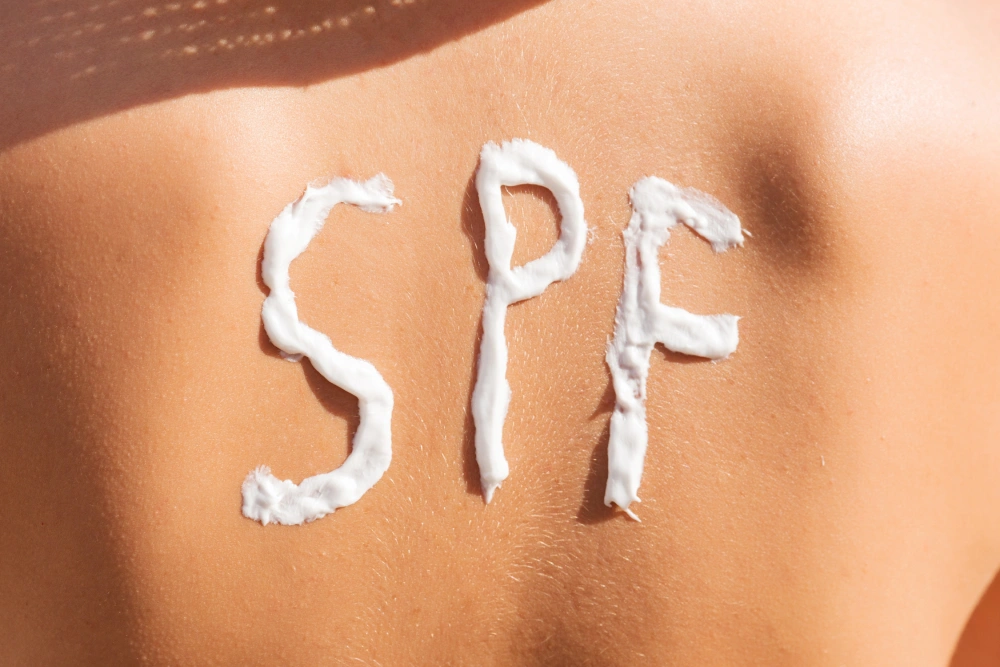
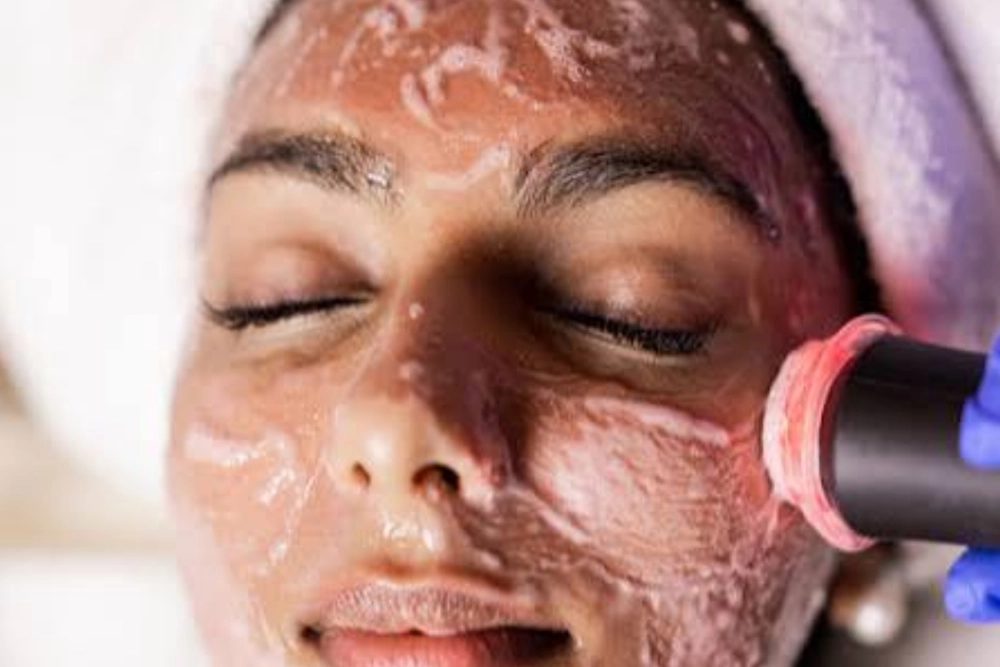
Book a visit if redness, burning or a rash lasts more than a few days, if eczema, psoriasis or acne flares badly, if skin blisters, swells or oozes or if dark patches spread. A dermatologist for pollution skin damage in Delhi can find the cause first, then plan treatment around it. At Klarity Skin Clinic, options include:
Your dermatologist will choose what suits your skin and your calendar. For more recovery ideas, read our guide on post-Navratri skincare recovery.
The crackers last a few hours. The smoke clears in days. Your skin, though, remembers how you treated it. Shield it, mask up, cleanse the same night, keep it calm and examine it every morning and you can protect your skin from firecracker smoke without skipping a single celebration. If the smog still leaves its mark, the team at The Klarity can read your skin, repair what the festival left behind and plan care around your calendar. Book your consultation and make this the Diwali your skin enjoys too.
It can. Fine particles and soot sit on the surface, irritate the skin, weaken its barrier and clog pores. For people with eczema, acne or pigmentation, smoke can also trigger flare-ups and darker marks. The effect is usually mild with good care, but repeated exposure adds up, so cleansing and moisturising matter.
Yes. Rinse or cleanse gently the same evening, then double cleanse before bed to lift soot and sunscreen. Use lukewarm water and pat dry. Avoid scrubbing, because it adds irritation on top of what the smoke has already done.
Yes. Haze and smog do not block UV rays and skin that is already irritated with pigments more easily. Use SPF 30 or more every morning and reapply if you are outdoors for hours. Acne-prone skin does well with a lightweight, non-comedogenic formula.
A well-fitted mask limits the smoke reaching your nose, mouth and lower face and it helps your lungs too. It does not replace cleansing. Wash your face and any reusable mask afterwards and avoid heavy makeup underneath so pores stay clear.
Mild dullness and dryness often settle within about a week of gentle care. Breakouts, rough patches or dark marks can take a few weeks. If nothing improves after a week or things get worse, see a dermatologist rather than adding more products.
Vitamin C is usually fine when your skin is calm. Pause retinol and strong acids if your skin feels tight, stings or looks red and bring them back slowly after the reset. Avoid starting any new active during the festival and patch test anything new.
Start with gentle options. Freshly irritated skin needs time to calm before stronger treatments such as peels or lasers. A dermatologist can check your skin and set the right timing, which also stops you stacking treatments just before a function.
Klarity Skin Clinic in M Block Market, Greater Kailash II, offers consultations for pollution-related skin concerns, from barrier care and pigmentation to scalp detox. Your dermatologist will start with your skin and your timeline, then recommend a plan. Book an appointment to get started.
Klarity Skin Clinic, M – 69, First Floor,
M Block Market, Greater Kailash II, New Delhi 110048
Copyright © 2025 All Rights Reserved.
Klarity Skin Clinic is Unit of Acara Wellness Private Limited.